CALIFORNIA WATER INFORMATION
Know What's in Your Water.
A free guide from US Longevity Laboratories to what's in California tap water, how to read your utility's report, how filtration really works, and how water matters in every part of life.
AI WATER REPORT
Check My Water
Enter your California ZIP code or your water utility's name. Our AI reads publicly available water quality data and explains it in plain language.
ZIP codes and utility names you enter are not stored.
This report is generated from public data and general knowledge and may be out of date. Your utility's Consumer Confidence Report is the official source. This is not a laboratory test of your water.
SOURCES
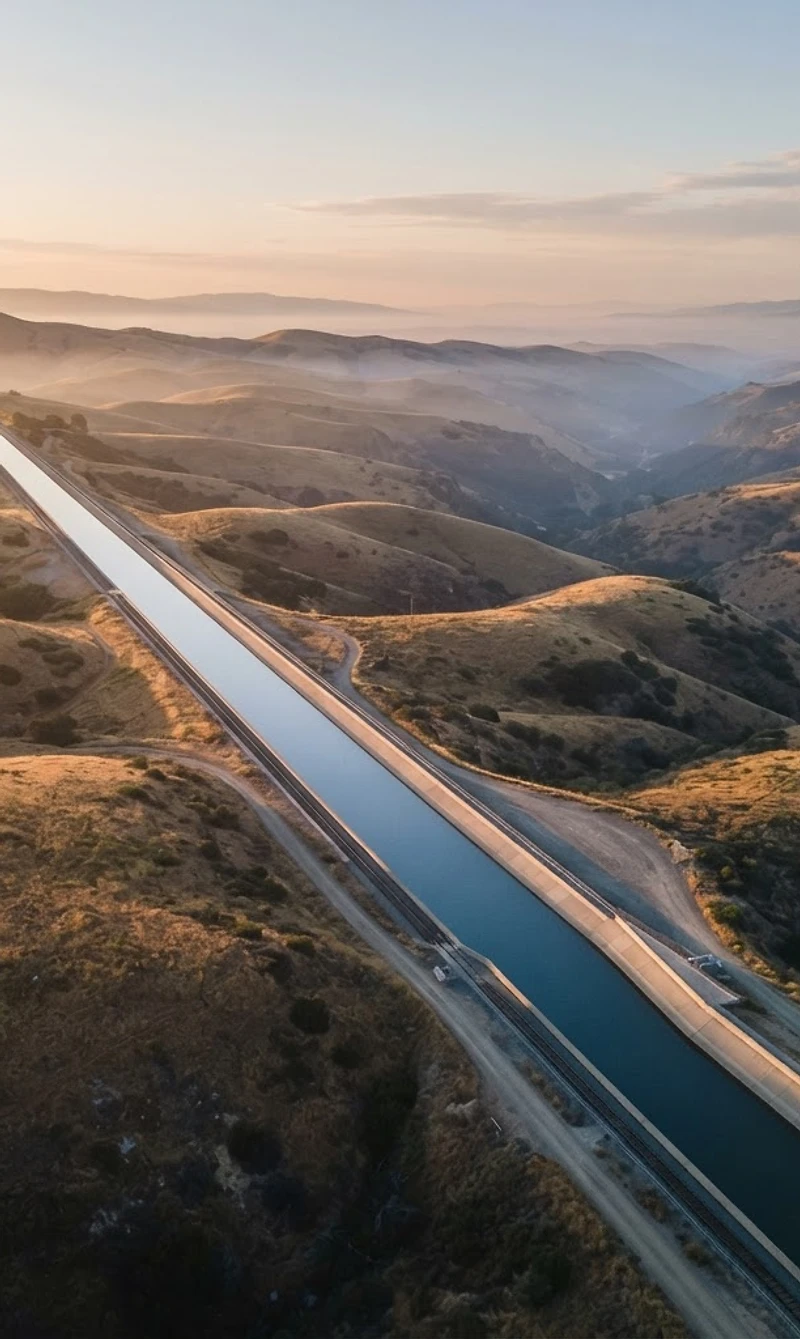
Where California's Water Comes From
The Colorado River
Supplies much of Southern California through the Colorado River Aqueduct.
The State Water Project
Carries water from the Sierra Nevada through the Delta to cities and farms.
The Los Angeles Aqueduct
Brings water from the Owens Valley to Los Angeles.
Groundwater
Wells supply much of the Central Valley and many smaller communities.
Recycled & Desalinated Water
A growing share, especially in Orange and San Diego counties.
Your source shapes your water. River water tends to be harder and more mineral-rich; groundwater can carry naturally occurring arsenic or nitrates from farming.
CONTAMINANTS
What's in Tap Water, Explained
Most contaminants are measured in parts per billion. One part per billion is about one drop in an Olympic swimming pool.
YOUR ANNUAL REPORT
How to Read Your Water Quality Report
Find the MCL
The maximum contaminant level allowed by law.
Find the PHG
California's public health goal, often much lower than the MCL.
Compare the detected level to both
Look at the average and the range your utility measured.
Check the "Violations" section
Any violation must be listed and explained by your utility.
Look at the date
Reports come out once a year, usually by July 1.
Sample Consumer Confidence Report
Illustrative example only — not real data.
Substance | Units | 1MCL | 2PHG | 3Detected (range) | 4Violation | Typical source | 5Year |
|---|---|---|---|---|---|---|---|
| Arsenic | ppb | 10 | 0.004 | 2.1 (ND–4.0) | No | Natural deposits | 2025 |
| Nitrate (as N) | ppm | 10 | 10 | 3.2 (1.1–5.6) | No | Fertilizer runoff | 2025 |
| Fluoride | ppm | 2 | 1 | 0.7 (0.6–0.8) | No | Water additive | 2025 |
| Hardness | ppm | — | — | 210 (180–240) | No | Natural minerals | 2025 |
A detection is not a violation. Many substances are present at levels far below limits.
Printable versionHOME TREATMENT
How Filtration Really Works
Activated carbon
Pitcher & Faucet Filters
Good at
Improves taste; reduces chlorine and some lead.
Keep in mind
Does not remove nitrates or most PFAS. Cartridges must be changed on schedule.
Membrane filtration
Under-Sink Reverse Osmosis
Good at
Removes most contaminants, including PFAS, arsenic, and nitrates.
Keep in mind
Slower, sends some water down the drain, and removes minerals too.
Point of entry
Whole-House Systems
Good at
Treats every tap in the home, usually with carbon and sometimes softening.
Keep in mind
Larger installation and upkeep; not always designed for health contaminants.
Ion exchange
Water Softeners
Good at
Remove hardness, reducing scale and spots.
Keep in mind
Not a purifier. Softened water adds sodium or potassium.
Light and heat
UV & Distillation
Good at
UV inactivates microbes; distillation produces near-total purity.
Keep in mind
UV does not remove chemicals. Distillation is slow and uses energy.
Look for NSF/ANSI certification (Standard 53 for health contaminants, 58 for reverse osmosis). Certification tells you a filter does what it claims.
EVERYDAY
Water at Home
Cooking & Coffee
Coffee, tea, and rice are mostly water, so chlorine and minerals change their taste. Carbon filtration often makes the biggest difference in flavor.
Ice & Appliances
Hard water leaves scale in kettles, dishwashers, and water heaters, shortening their life. Descaling and softening help; ice takes on the taste of the water it's made from.
Baby Formula
Infants are more sensitive to nitrates and lead. Pediatric guidance on which water to use for formula matters, especially for homes on private wells.
Old Homes & Pipes
Homes built before 1986 may have lead solder. If water has been sitting for hours, run the cold tap for 30 seconds to two minutes before drinking or cooking.
Hot Water
Hot water dissolves metals from plumbing more easily and sits in the water heater. Use cold water for drinking, cooking, and baby formula, then heat it.
Bottled vs. Tap
Tap water is regulated by the EPA and State Water Board; bottled water by the FDA and California's Department of Public Health. "Spring" comes from an underground source, "purified" has been treated, and "distilled" has been boiled and condensed.

WATER FOR LIFE
Everything Needs Water
Plants & Gardens
Most plants tolerate tap water, though some houseplants are sensitive to chlorine and fluoride, and softened water's sodium can harm soil. Rain barrels and laundry-to-landscape greywater systems are allowed in California with simple guidelines.
Pets
Pets need fresh water daily in clean bowls — stainless steel or ceramic are easy to keep clean. The same contaminants that matter for people matter for animals.
Hydration
Needs vary with age, activity, climate, and health; food supplies part of it. Electrolyte, mineral, alkaline, and hydrogen waters differ in what's dissolved in them. Evidence for health benefits beyond ordinary hydration is limited and still being studied.
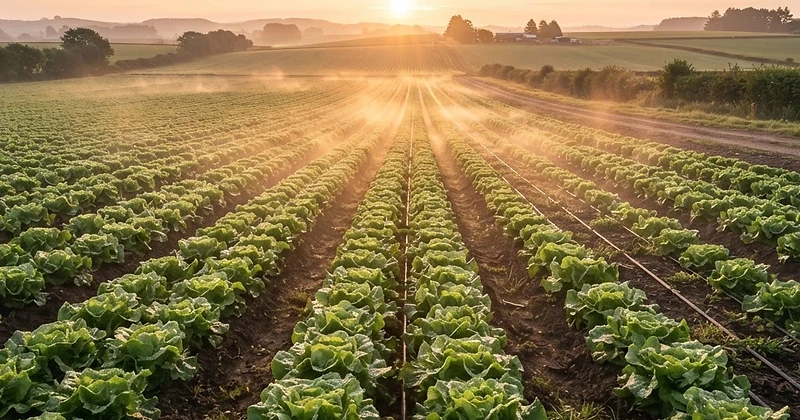
Farms & Food
The Central Valley grows a large share of the nation's fruits, nuts, and vegetables, and in dry years relies heavily on groundwater. How that water is managed shapes what reaches your plate.
Pools & Spas
Pools are commonly kept at 1–3 parts per million of free chlorine and a pH of about 7.2–7.8. Balanced water is gentler on skin, eyes, and equipment.
Drought & Conservation
California moves between wet and dry cycles. Fixing leaks, watering early in the morning, and choosing native plants are simple ways to use less.
PREPAREDNESS
Water in an Emergency
After an earthquake, wildfire, or boil-water notice, water is the first thing that matters.
Print the Emergency Water ChecklistStore one gallon per person per day, for at least three days (two weeks is better).
Rotate stored water every six months.
Know how to shut off your home's water main.
A boil-water notice means one full minute at a rolling boil.
After a wildfire, don't drink tap water until the utility clears it; heat can release benzene from plastic pipes.
Unscented household bleach: about 8 drops per gallon of clear water, wait 30 minutes.

US LONGEVITY LABORATORIES
An Artificial Intelligence Longevity Research Corporation
The Science Behind Water.com.AI
Water.com.AI is a platform of US Longevity Laboratories, Inc., an artificial intelligence longevity research corporation based in Beverly Hills, California, with laboratory facilities in Needles, California. The laboratory focuses on the science of healthy aging, and clean water is where that science begins. This site is our free public resource.
Water.com.AI does not currently accept water samples for testing.
QUESTIONS
Frequently Asked Questions
OUR PLATFORMS
More From US Longevity Laboratories
BUSINESS INQUIRIES
Partner With Water.com.AI
Water.com.AI is available for sponsorship, advertising, and platform licensing to companies in water filtration, water delivery, plumbing, irrigation, water technology, and related fields. Sponsorships are flat-fee for a fixed term.

John D. Abravanel Berdugo
CEO & Founder, US Longevity Laboratories, Inc.
GET IN TOUCH
Contact
Water.com.AI is operated by US Longevity Laboratories, Inc. For general questions, use the form below or email john@water.com.ai. For business and partnership inquiries, call 323-359-5210.
We can't test your water or tell you whether it is safe to drink. For a water emergency, contact your water utility.